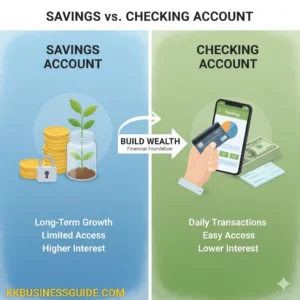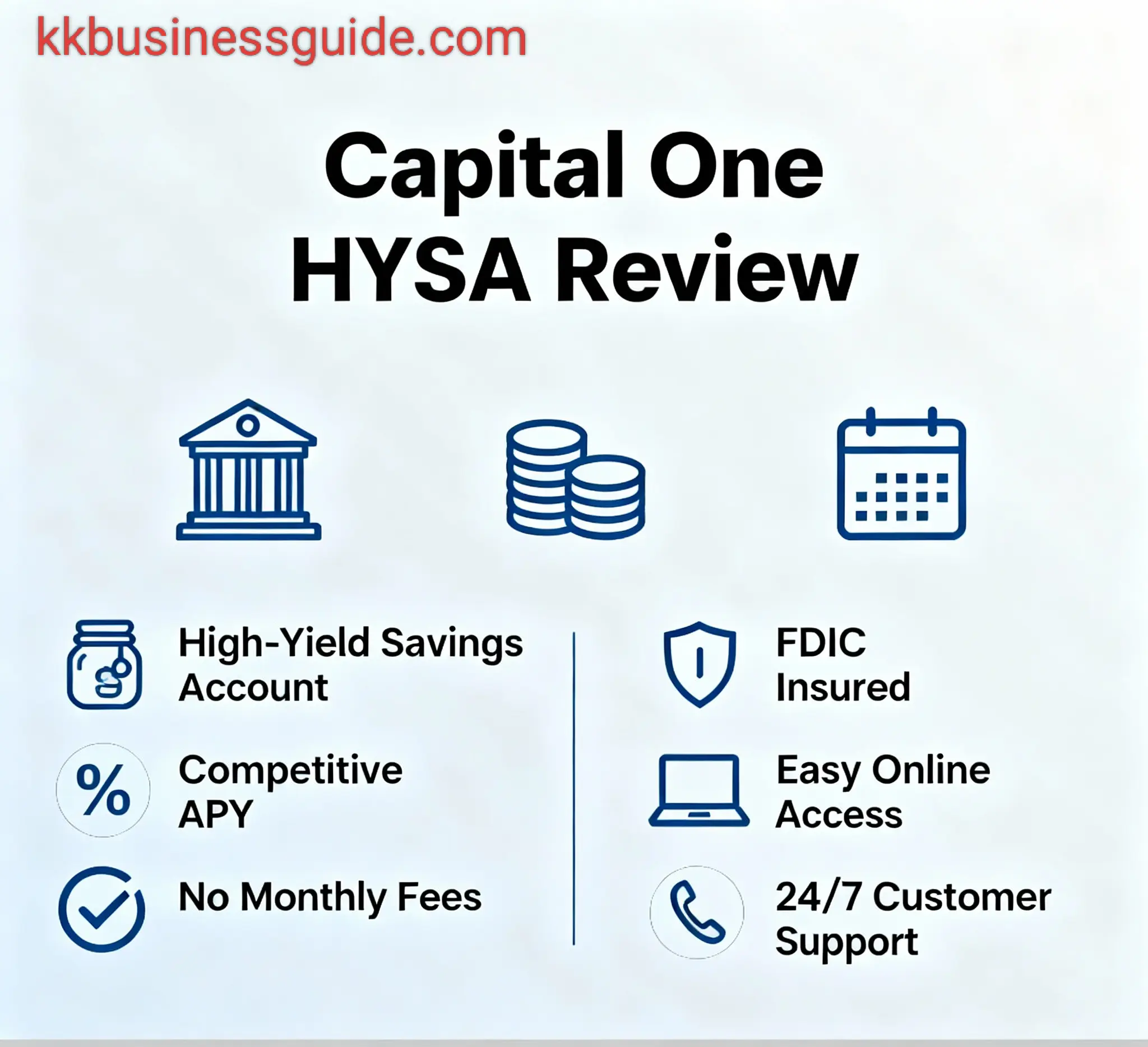
When it comes to saving money, choosing the right bank account can make a huge difference. A High-Yield Savings Account (HYSA) is one of the best financial tools for building long-term savings with safety, security, and higher interest rates than traditional savings accounts. Among the most popular choices today is the Capital One 360 Performance Savings Account, often simply called the Capital One HYSA.
In this detailed review, we will explore every aspect of the Capital One HYSA — including interest rates, features, pros and cons, account requirements, comparisons with competitors, and whether it’s the right choice for your financial goals. By the end, you’ll have all the information you need to decide if this account deserves a place in your financial strategy.
What is a High-Yield Savings Account (HYSA)?
A High-Yield Savings Account (HYSA) is a type of savings account offered by banks and financial institutions that pays a much higher Annual Percentage Yield (APY) compared to regular savings accounts. While a traditional savings account at a big bank might pay as little as 0.01% APY, a HYSA can offer rates of 4% or more, depending on the market and Federal Reserve decisions.
The purpose of an HYSA is simple: allow your money to grow faster while keeping it safe and easily accessible. This makes it perfect for emergency funds, short-term savings goals, or just keeping your money in a secure place where it earns more than a regular bank account.
Capital One: A Quick Background
Capital One Financial Corporation is one of the largest banks in the United States, serving millions of customers with credit cards, checking accounts, auto loans, and savings products. Founded in 1988, Capital One has grown into a household name, particularly known for its innovative credit card offerings. But beyond credit cards, Capital One has also built a strong reputation for its Capital One 360 Banking division, which focuses on online-first, customer-friendly banking solutions.
The Capital One 360 Performance Savings Account is their flagship HYSA product, designed for customers who want higher yields, no hidden fees, and simple digital banking tools. It competes directly with other online-first banks like Ally Bank, SoFi, Discover, and Marcus by Goldman Sachs.
Why Consider Capital One HYSA?
With dozens of banks offering high-yield savings accounts, why should someone choose Capital One’s HYSA? The answer lies in its balance of competitive APY, low fees, brand trust, and digital convenience. Customers want more than just interest rates; they also want strong customer service, mobile banking, security, and reliability. Capital One checks most of these boxes, which is why it continues to be one of the most searched and trusted HYSA options in 2025.
Key Features of Capital One HYSA
Let’s take a closer look at the major features that make the Capital One 360 Performance Savings Account attractive:
1. Competitive Interest Rates
The standout feature of any HYSA is its interest rate. Capital One consistently offers an APY that is significantly higher than traditional banks. While rates can change depending on the market, Capital One generally stays competitive with other top online banks.
2. No Monthly Fees
Unlike many traditional savings accounts, the Capital One HYSA comes with no monthly maintenance fees. This means you don’t have to worry about losing money just to keep your account open, making it perfect for savers of all levels.
3. No Minimum Balance Requirement
Some banks require you to maintain a large balance to earn the advertised APY. With Capital One, you can open an account with any amount and still enjoy the same interest rate, whether you have $10 or $100,000.
4. FDIC Insurance Protection
Like all legitimate U.S. banks, Capital One savings accounts are FDIC insured up to $250,000 per depositor, per account type. This means your money is safe even if the bank were to face financial troubles.
5. Easy Online & Mobile Banking
The Capital One mobile app and website provide seamless account access. You can check balances, transfer money, set up automatic savings, and track your financial progress from anywhere. The app also integrates with Capital One’s credit cards and checking accounts, making it convenient for existing customers.
6. Automatic Savings Tools
Capital One allows you to set up automatic transfers from checking to savings, helping you build your savings without having to think about it. This feature is especially useful for creating an emergency fund or saving toward specific goals.
7. Widely Trusted Brand
Capital One is a major U.S. bank with a long-standing reputation. Customers can feel confident that they are dealing with a well-established institution, not a startup with limited history.
8. Access to 24/7 Customer Support
With Capital One, you have access to 24/7 customer support through phone, live chat, and in-person branches in certain locations. This combination of online-first convenience with real-world support gives it an edge over purely digital banks.
Why HYSAs Are Important in 2025
With rising inflation and shifting interest rate policies from the Federal Reserve, more people are turning to HYSAs in 2025 to keep their money growing without taking unnecessary risks. Stock markets can be volatile, but a savings account provides stability and guaranteed returns. For anyone who wants a balance of safety and growth, an HYSA like Capital One’s is a smart financial move.
For savers who are tired of earning almost nothing at traditional banks, the Capital One HYSA offers an attractive alternative with competitive yields, zero fees, and strong digital tools.
Capital One HYSA Interest Rates Explained
The most attractive feature of any High-Yield Savings Account is its interest rate, also known as the Annual Percentage Yield (APY). The Capital One 360 Performance Savings Account consistently offers one of the most competitive APYs among large U.S. banks. While traditional banks often pay as little as 0.01% APY, Capital One’s HYSA usually provides yields in the range of 4.00% to 4.35% APY, depending on the current economic environment.
What makes this powerful is that you don’t need to meet special conditions, such as minimum balances or monthly deposits, to qualify for the higher rate. Every customer enjoys the same APY regardless of balance, which is a major advantage compared to competitors that use tiered interest structures.
How Interest is Calculated
Capital One calculates interest on a daily basis using your account’s end-of-day balance. The interest is then compounded monthly and deposited directly into your account. This means your money grows faster compared to quarterly or annual compounding schedules.
Real-World Example
If you deposit $10,000 into a Capital One HYSA at an APY of 4.25%, you would earn about $425 in interest over a year — significantly more than the $1 or $2 you’d earn at a traditional bank.
Minimum Balance Requirements
One of the biggest selling points of Capital One’s HYSA is its no minimum balance requirement. You can open an account with as little as $0 and still earn the same APY as someone with a six-figure balance. This makes the account accessible to everyone, from college students building their first emergency fund to seasoned investors looking for a safe place to park cash.
Fees and Charges
Hidden fees are one of the biggest frustrations for banking customers. Thankfully, Capital One takes a transparent, customer-first approach with its HYSA. Here’s what you can expect:
- No monthly maintenance fees – You won’t lose money just for keeping your account open.
- No overdraft fees – Since this is a savings account, you cannot overdraft.
- No minimum deposit fees – Open with any amount.
- Free transfers – Move money between Capital One accounts or external linked accounts without cost.
The only potential fees you may encounter are for wires, expedited transfers, or excessive transactions beyond federal guidelines. However, most regular users never face these fees, making Capital One one of the most cost-effective HYSA’s available.
Security Measures: How Safe is Capital One HYSA?
When choosing a place to store your money, security is just as important as returns. Capital One invests heavily in digital security to protect its customers. Some of the key security features include:
- FDIC Insurance – Deposits are insured up to $250,000 per depositor, per ownership category.
- Two-Factor Authentication (2 FA) – Adds an extra layer of protection when logging in.
- Encryption Technology – All online and mobile transactions are encrypted to prevent unauthorized access.
- Fraud Monitoring – Capital One actively monitors for unusual activity and notifies you immediately if something looks suspicious.
- Zero Liability Protection – Customers are not held responsible for unauthorized transactions.
Combined with Capital One’s reputation as a leading U.S. bank, these features ensure your savings are well protected.
Ease of Use: Online and Mobile Banking
The Capital One mobile app and web portal are among the most user-friendly in the banking industry. Customers can easily check balances, transfer funds, view interest earnings, and manage linked accounts. Some standout features include:
- Account Overview Dashboard – See your checking, savings, and credit card balances in one place.
- Mobile Check Deposit – Deposit checks by taking a picture with your smartphone.
- Bill Pay & Transfers – Move money seamlessly between accounts or pay bills directly.
- Goal Setting Tools – Create specific savings goals and track progress visually.
The app has high ratings on both the Apple App Store and Google Play Store, making it a reliable choice for tech-savvy users who want to manage their finances on the go.
Deposits and Withdrawals
One of the most important aspects of a savings account is how easily you can put money in and take money out. Capital One makes this process smooth and convenient.
Deposits
- Direct Deposit – Have your paycheck sent directly into your savings account.
- Mobile Check Deposit – Upload checks through the mobile app.
- Electronic Transfers – Move funds from external bank accounts via ACH transfer.
- Branch Deposits – For those near a Capital One branch or café, in-person deposits are available.
Withdrawals
Withdrawals are also simple. You can transfer money back to a linked Capital One checking account or an external bank. While savings accounts are designed for saving (not daily spending), Capital One allows up to 6 transfers per month, in line with federal guidelines, though this may vary.
Customer Support Review
Strong customer support is a key factor for many when choosing a bank. Capital One offers multiple channels for help:
- 24/7 Phone Support – Speak directly to a representative at any time.
- Live Chat – Instant support through the mobile app or website.
- Email Assistance – Non-urgent queries can be handled via email.
- In-Person Service – Available at Capital One branches and cafés in select locations.
Customers generally report positive experiences with Capital One’s support team, noting fast response times and knowledgeable representatives. This is a major advantage over some purely online banks, which only offer email support.
Why These Features Matter
When you combine competitive interest rates, no fees, strong security, and easy access, the Capital One HYSA becomes more than just a place to store money — it’s a tool that actively helps you grow wealth without risk. For 2025 and beyond, as inflation and market conditions remain uncertain, a reliable savings account like this offers financial stability while still delivering attractive returns.
Capital One HYSA: Pros and Cons
Every financial product has strengths and weaknesses. While the Capital One HYSA offers many advantages, it’s also important to recognize where it may fall short compared to other banks.
| Pros | Cons |
|---|---|
| Competitive APY significantly higher than traditional savings accounts | Not always the very highest APY available compared to newer online-only banks |
| No monthly maintenance fees | No physical branches in many areas, limiting in-person banking options |
| No minimum balance required to earn APY | Transfers between external accounts may take 2–3 business days |
| FDIC insurance up to $250,000 | No ATM card directly linked to savings (must transfer to checking first) |
| User-friendly online and mobile banking tools | Federal withdrawal limits (up to 6 per month) |
| 24/7 customer support with phone, chat, and email | Some advanced features (like joint goals) are limited compared to competitors |
How Capital One HYSA Compares to Competitors
To truly understand whether the Capital One 360 Performance Savings Account is right for you, it’s essential to compare it against other leading HYSAs. Here’s how it stacks up:
Capital One vs. Ally Bank
- APY: Both offer competitive APYs, but Ally sometimes edges out with slightly higher rates.
- Fees: Both accounts have no maintenance fees.
- Technology: Ally is online-only, while Capital One offers limited physical branches and cafés.
- Winner: Tie — Ally for tech-savvy users, Capital One for those who value a bigger bank’s stability.
Capital One vs. SoFi Bank
- APY: SoFi often offers promotional APYs that can be higher than Capital One’s.
- Extra Perks: SoFi bundles checking, savings, and investing with bonuses and cashback.
- Security: Both are FDIC insured, but Capital One has a longer track record.
- Winner: SoFi for young professionals looking for perks; Capital One for stability and trusted reputation.
Capital One vs. Discover Bank
- APY: Both typically offer similar APYs.
- Customer Service: Discover is famous for top-rated customer support, while Capital One offers strong but slightly less personalized service.
- Technology: Both offer intuitive mobile apps and web platforms.
- Winner: Discover if support is your top priority; Capital One if you want an all-in-one banking ecosystem.
Capital One vs. Marcus by Goldman Sachs
- APY: Marcus often has slightly higher APYs but requires online-only interactions.
- Features: Marcus does not offer checking or credit cards, while Capital One provides a full range of products.
- Winner: Marcus for pure savers, Capital One for those wanting a multi-product bank.
Who Should Open a Capital One HYSA?
The Capital One HYSA is designed for a wide range of customers. You might benefit most if you fit into one of these categories:
- New Savers – Perfect for those starting an emergency fund with no minimum balance required.
- Families – Safe place to store vacation savings, tuition money, or household reserves.
- Professionals – Convenient for managing savings alongside Capital One credit cards and checking accounts.
- Retirees – Provides a secure way to earn interest without market risk.
- Side Hustlers – Great for freelancers or gig workers who need to set aside tax money or business savings.
On the other hand, if you’re chasing the absolute highest APY possible, you might want to explore newer online-only banks or credit unions that occasionally offer higher promotional rates. However, they may not match Capital One’s long-term stability.
Best Strategies to Maximize Savings with Capital One HYSA
Opening a Capital One HYSA is just the first step. To truly maximize your financial growth, consider the following strategies:
1. Automate Your Savings
Set up recurring transfers from your checking account to your HYSA. Automating the process ensures consistent contributions and eliminates the temptation to skip deposits.
2. Use It as an Emergency Fund
Financial experts recommend keeping 3–6 months’ worth of expenses in an easily accessible account. The Capital One HYSA is ideal for this, as it offers both liquidity and strong returns compared to traditional banks.
3. Separate Savings Goals
Use multiple accounts or Capital One’s goal-tracking features to separate funds — for example, one goal for a vacation, another for a new car, and one for emergencies. Visual tracking helps you stay motivated.
4. Link with Capital One Credit Cards
If you also have a Capital One credit card, you can easily transfer cashback rewards or surplus funds into your savings. This creates a seamless ecosystem for building wealth.
5. Monitor Interest Rate Trends
HYSA rates can fluctuate based on Federal Reserve decisions. Keep an eye on updates and consider moving funds if competitors significantly increase their rates. That said, Capital One typically remains competitive.
6. Avoid Excessive Withdrawals
Since there’s a limit to the number of monthly withdrawals, treat your HYSA as a savings-only account, not a checking substitute. This ensures your balance grows steadily without disruptions.
7. Reinvest Interest Earnings
Instead of withdrawing your earned interest, allow it to compound. Over time, reinvesting interest dramatically boosts your overall returns thanks to the power of compounding.
The Capital One HYSA strikes a balance between strong APYs, no fees, and trusted service. While it may not always top the charts in terms of interest rates, it offers reliability, a full-service banking ecosystem, and ease of use that many competitors can’t match. For savers looking for a long-term partner, it’s a top choice in 2025.
Frequently Asked Questions (FAQs) About Capital One HYSA
1. What APY does Capital One HYSA offer in 2025?
As of 2025, the Capital One 360 Performance Savings Account typically offers an APY between 4.00% and 4.35%. Rates may vary depending on Federal Reserve decisions, but Capital One consistently remains competitive with the top high-yield savings accounts.
2. Is there a minimum balance required?
No. One of the biggest advantages of Capital One’s HYSA is that you can start with as little as $0 and still earn the advertised APY. This makes it ideal for beginners and advanced savers alike.
3. Are there any fees associated with Capital One HYSA?
No monthly maintenance fees are charged. However, you may incur costs for services like wire transfers or excessive withdrawals beyond federal guidelines.
4. How safe is my money in a Capital One HYSA?
Your deposits are FDIC insured up to $250,000 per depositor, per ownership category. In addition, Capital One employs strong security features like two-factor authentication, encryption, and fraud monitoring.
5. Can I withdraw money anytime?
Yes, you can transfer funds to linked accounts at any time. However, savings accounts are subject to withdrawal limits (typically 6 per month), so it’s not designed for daily spending.
6. Does Capital One HYSA come with an ATM card?
No, the HYSA does not come with a direct debit or ATM card. You must transfer funds to a linked Capital One checking account (or external bank) for access via ATM or debit card.
7. Can I open multiple HYSA accounts with Capital One?
Yes. Many customers open separate accounts for different savings goals (e.g., emergency fund, vacation, down payment). This makes goal-tracking easier.
8. Is Capital One HYSA better than a CD (Certificate of Deposit)?
It depends. A CD may offer higher rates for locking money away for a fixed term, while a HYSA offers flexibility and liquidity. If you want access to your funds, HYSA is better. If you don’t mind locking funds for 12–24 months, a CD may be more rewarding.
9. Can international customers open a Capital One HYSA?
No, you must be a U.S. citizen or resident with a valid Social Security Number to open an account.
10. How does Capital One HYSA compare to credit unions?
Credit unions sometimes offer higher APYs, but Capital One provides nationwide availability, 24/7 support, and a wide product range, making it more convenient for most customers.
Expert Opinions and User Reviews
Financial experts generally view the Capital One HYSA as one of the best “big bank” options for savers who want safety and convenience without sacrificing returns.
- Experts highlight Capital One’s balance of strong APY, digital tools, and customer support.
- Users praise the easy-to-use app, automatic savings features, and reliability of transfers.
- Common complaints include slower external transfers (2–3 days) and the lack of a debit/ATM card linked directly to savings.
On Trustpilot and major app stores, Capital One’s banking services consistently earn 4+ star ratings, reflecting overall customer satisfaction.
Alternatives to Capital One HYSA
If you’re comparing options, here are a few popular alternatives worth exploring:
1. Ally Bank Online Savings
Known for its consistently high APYs, Ally is a top choice for tech-savvy users. However, it lacks any physical branches or in-person services.
2. SoFi Checking & Savings
SoFi often offers higher promotional APYs and perks like cash bonuses. It’s great for younger customers who want integrated financial tools like investing and student loan refinancing.
3. Discover Online Savings
Discover provides similar APYs and is especially strong in customer service. It’s an excellent choice if you value responsive, personalized support.
4. Marcus by Goldman Sachs
Marcus frequently offers some of the best APYs on the market but doesn’t provide checking accounts or credit cards. It’s best for pure savers who don’t need a full-service bank.
5. Credit Unions
Some local and national credit unions offer outstanding rates on savings accounts. However, membership requirements and limited digital tools may be drawbacks compared to Capital One.
Final Verdict: Is Capital One HYSA Worth It?
After reviewing all aspects of the Capital One 360 Performance Savings Account, here’s our conclusion:
- Strengths: Competitive APY, no fees, no minimum balance, FDIC insurance, user-friendly app, and 24/7 support.
- Weaknesses: Not always the very highest rate available, limited physical locations, and slower external transfers.
Overall, the Capital One HYSA is an excellent choice for anyone who wants a safe, reliable, and flexible high-yield savings account. While some competitors may occasionally offer slightly higher APYs, Capital One delivers a strong blend of stability, accessibility, and digital convenience that makes it one of the top HYSA’s in 2025.
If your goal is to grow your savings without hidden fees while enjoying the peace of mind that comes with a trusted national bank, then the Capital One HYSA is absolutely worth considering.
conclusion
Saving money has never been more important than it is today. With inflation, economic uncertainty, and financial stress affecting millions, having a strong savings account is no longer optional — it’s essential. The Capital One HYSA gives you a tool to protect your money, grow it safely, and prepare for the future.
FAQ:-
Is Capital One good for a high-yield savings account?
Yes, Capital One is considered a good option for a high-yield savings account. Their 360 Performance Savings Account offers a competitive interest rate, no monthly fees, and no minimum balance requirement. It’s also FDIC-insured, meaning your money is safe up to the legal limits. This makes it a strong choice for people who want to grow their savings without worrying about hidden charges.
Which bank gives 7% interest on savings accounts?
Currently, most well-known U.S. banks do not offer 7% APY on savings accounts. However, some smaller credit unions, neobanks, and fintech apps occasionally promote limited-time offers or rewards accounts with higher APY (sometimes up to 7%). These usually come with conditions like balance caps or debit card usage requirements. For standard banks, average HYSA rates range between 3% – 5% APY. Always check the latest offers before applying.
Who has a 5% APY?
Several online banks and credit unions offer around 5% APY on high-yield savings accounts or certificates of deposit (CDs). These rates change frequently based on market conditions. As of now, some online financial institutions and fintech platforms are promoting 5% APY or higher to attract new customers. It’s a good practice to compare options from banks, credit unions, and trusted online savings platforms to find the best deal.
What is Capital One’s HYSA rate?
As of September 2025, Capital One’s 360 Performance Savings Account offers an APY of 3.50%. The rate is variable, which means it can change depending on market conditions. Still, it remains competitive compared to traditional savings accounts that often pay below 1%.