Business Savings Account
Managing business finances goes far beyond just keeping track of income and expenses. One of the most important financial tools that entrepreneurs, startups, and established companies can use is a business savings account. Unlike a personal savings account, a business savings account is designed to help organizations securely store funds, earn interest, and prepare for future expenses, taxes, and investments.
In this detailed guide, we’ll cover everything you need to know about business savings accounts in 2025. From understanding how they work to exploring their benefits, types, interest rates, and the best banks that offer them, this article will help you decide whether opening one is the right move for your company.
What is a Business Savings Account?
A business savings account is a bank account created specifically for business entities such as sole proprietorships, LLCs, corporations, and partnerships. It works much like a personal savings account but is linked to a company’s financial profile instead of an individual’s. These accounts allow businesses to:
- Safely store cash reserves
- Earn interest on idle funds
- Separate operational funds from savings
- Plan for taxes, expansion, or emergencies
- Maintain financial compliance and credibility
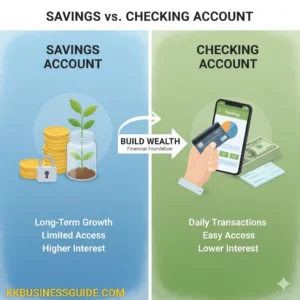
While a business checking account is typically used for daily transactions, payroll, and vendor payments, a business savings account is designed for long-term or short-term savings. Together, they form the backbone of responsible business banking.
Why Do Businesses Need a Savings Account?
Many entrepreneurs assume that simply having a checking account is enough. However, keeping all funds in one account can limit financial growth and pose risks. A business savings account provides a strategic advantage by:
- Earning Interest: Instead of leaving idle cash in a checking account, savings accounts allow funds to grow through interest.
- Building Reserves: Businesses can create an emergency fund to handle downturns or unexpected costs.
- Tax Preparation: Setting aside money for taxes helps avoid cash flow crunches when tax season arrives.
- Professionalism: Keeping personal and business finances separate builds credibility with lenders, investors, and tax authorities.
- Future Planning: Businesses can earmark savings for expansion, equipment upgrades, or marketing campaigns.
In short, a business savings account is not just about storing money—it’s about strategic financial management.
How Does a Business Savings Account Work?
A business savings account works similarly to a personal savings account, with a few key differences tailored for businesses. Here’s how they typically operate:
- Account Setup: A business must provide legal documents such as an EIN (Employer Identification Number), articles of incorporation, or partnership agreements to open the account.
- Deposits: Funds can be transferred from a business checking account, wire transfers, or customer payments.
- Interest Earnings: The bank pays interest on the balance. Rates may vary depending on the bank and the type of savings account.
- Withdrawal Limits: Some banks limit the number of withdrawals per month to encourage savings rather than frequent spending.
- Fees: Depending on the bank, there may be monthly maintenance fees, though many online banks offer fee-free savings accounts.
For example, if a business deposits $50,000 into a high-yield business savings account with a 3.50% APY, it could earn $1,750 in interest annually without lifting a finger. That’s free money simply for practicing good financial management.
Who Should Open a Business Savings Account?
Nearly all types of businesses can benefit from a savings account. Here are a few scenarios:
- Small Businesses: To separate personal and business funds and build a safety net.
- Startups: To store investor funds until they are deployed for growth projects.
- Freelancers & Sole Proprietors: To plan ahead for taxes and business expenses.
- Corporations & LLCs: To maintain financial compliance and manage larger reserves.
- Nonprofits: To responsibly hold donations and prepare for operating costs.
Essentially, if you run any form of business, a savings account can enhance your financial strategy and protect you from unexpected challenges.
Types of Business Savings Accounts
Not all business savings accounts are the same. Depending on the size of your company, your cash flow, and your financial goals, the type of account you choose can make a significant difference. Let’s explore the most common types of business savings accounts available in 2025.
1. Traditional Business Savings Account
A traditional business savings account works much like a personal savings account. It allows businesses to deposit funds, earn interest, and make occasional withdrawals. These accounts are widely available at most banks and credit unions.
- Best for: Small businesses and startups looking for simplicity.
- Pros: Easy to set up, FDIC or NCUA insured, low risk.
- Cons: Interest rates are usually lower than high-yield options.
2. High-Yield Business Savings Account
A high-yield business savings account offers significantly higher interest rates than traditional accounts. These are often provided by online banks with lower overhead costs, which allows them to pass the savings on to business customers.
- Best for: Businesses with larger balances or those looking to maximize interest earnings.
- Pros: Competitive APYs, usually no monthly fees, ideal for growing reserves.
- Cons: Online-only access, limited physical branches.
For example, American Express Business Savings is a popular option offering higher APYs than most traditional banks.
3. Business Money Market Account
A business money market account (MMA) combines features of both savings and checking. Businesses earn interest but also get limited access to checks and debit cards for withdrawals.
- Best for: Companies that need occasional liquidity while still earning interest.
- Pros: Higher interest than basic savings, check-writing and debit card access.
- Cons: May require a higher minimum balance, potential monthly fees.
Examples include Discover Business Money Market accounts, which offer competitive rates and easy access.
4. Business Certificates of Deposit (CDs)
A business certificate of deposit is a time deposit account where a company locks away funds for a fixed term in exchange for a guaranteed interest rate. Terms can range from 3 months to 5 years.
- Best for: Businesses with excess cash reserves they won’t need in the short term.
- Pros: Guaranteed returns, higher rates than savings accounts.
- Cons: Limited liquidity—early withdrawals often come with penalties.
For instance, Capital One Business CDs offer competitive APYs for different term lengths.
5. Business Sweep Accounts
A business sweep account automatically transfers (or “sweeps”) excess funds from a checking account into an interest-bearing savings or investment account overnight. This ensures idle funds always generate returns.
- Best for: Businesses with fluctuating cash flows that want automation.
- Pros: Automated savings, better interest returns without manual transfers.
- Cons: Usually offered by larger banks and may require higher balances.
6. Business Money Market Mutual Funds
Some businesses also invest in money market mutual funds, which are not bank deposits but rather investment products. These funds pool money to invest in short-term, low-risk securities.
- Best for: Businesses looking for higher returns with slightly more risk.
- Pros: Potentially higher yields than bank savings accounts.
- Cons: Not FDIC insured, subject to market fluctuations.
Choosing the Right Type of Account
Each type of business savings account serves a different purpose. For small businesses, a simple traditional or high-yield savings account may be enough. Larger corporations may prefer sweep accounts or CDs to maximize earnings on larger balances. It’s crucial to balance liquidity, interest rates, and risk tolerance when choosing the right account for your business.
Benefits of a Business Savings Account
Opening a business savings account is more than just a formality—it’s a financial strategy that can safeguard your company’s future. Whether you’re a startup, small business, or large enterprise, there are multiple benefits to maintaining a dedicated savings account. Let’s explore the most important ones.
1. Earn Interest on Idle Funds
Instead of letting money sit in a business checking account earning little or no interest, a business savings account allows funds to grow passively. Even modest APYs can add up over time, especially for businesses that maintain larger balances.
For example, depositing $100,000 into a high-yield business savings account at 3.50% APY would generate $3,500 in interest annually—free money that can be reinvested back into the business.
2. Build a Business Emergency Fund
Just as individuals need an emergency fund, businesses also face unexpected expenses—from equipment breakdowns to supply chain disruptions. A dedicated business savings account ensures you have quick access to funds when challenges arise.
Financial experts recommend that businesses keep at least 3–6 months of operating expenses in an emergency savings account.
3. Separate Business and Personal Finances
Mixing personal and business funds is one of the most common mistakes entrepreneurs make. Not only can it cause bookkeeping headaches, but it can also create legal and tax problems. A business savings account ensures clear separation, which is essential for compliance, audits, and credibility.
4. Prepare for Taxes
One of the smartest uses of a business savings account is setting aside tax money. By transferring a portion of revenue into savings, businesses avoid the cash crunch that often comes with quarterly or annual tax bills.
For instance, freelancers and LLC owners can move 25–30% of each payment received into a savings account designated for taxes.
5. Support Future Growth and Expansion
A business savings account helps you plan for the future. Whether it’s upgrading equipment, expanding to new markets, or investing in marketing campaigns, having savings ensures you don’t need to rely entirely on loans or credit cards.
Think of it as a self-funded way to finance growth opportunities without paying interest to lenders.
6. Improve Business Creditworthiness
Banks and investors look favorably on businesses that maintain strong financial reserves. Having a dedicated savings account shows that your company practices financial discipline, which can improve your chances of securing loans, grants, or investment capital.
7. FDIC or NCUA Insurance Protection
Most business savings accounts at banks are FDIC-insured up to $250,000 per depositor, per account ownership category. Credit unions offer similar protection under the NCUA. This ensures that even in the unlikely event of a bank failure, your company’s savings are protected.
8. Financial Discipline and Accountability
A separate savings account encourages businesses to think strategically about money. By regularly transferring funds from checking to savings, companies practice budget discipline and gain accountability for financial decisions.
9. Access to Additional Business Banking Services
Many banks bundle savings accounts with other services such as merchant accounts, credit cards, and small business loans. By opening a business savings account, you may unlock exclusive benefits and financial tools designed for growth.
Real-Life Example of Benefits
Consider a small consulting firm that keeps all revenue in its business checking account. By moving $50,000 into a high-yield savings account at 4% APY, the firm earns an extra $2,000 annually in interest. This extra income can cover software subscriptions, office supplies, or contribute to an employee bonus pool. That’s the power of using a business savings account strategically.
How to Choose the Best Business Savings Account
With so many banks, credit unions, and online financial institutions offering business savings accounts, choosing the right one can feel overwhelming. However, by focusing on key features, you can identify the account that best aligns with your company’s financial goals. Here are the most important factors to consider.
1. Annual Percentage Yield (APY)
The APY is the interest rate you’ll earn on your balance, expressed on an annual basis. The higher the APY, the more your money will grow over time. Online banks often provide the best APYs because of lower overhead costs compared to traditional banks.
For example, while a brick-and-mortar bank may offer only 0.25% APY, an online institution could offer 3.50%–4.00% APY on business savings accounts.
2. Minimum Balance Requirements
Some banks require a minimum balance to open or maintain a business savings account. Falling below this amount could lead to fees or lower interest rates. Be sure to choose an account that matches your typical cash flow.
- Low minimum balance accounts: Best for startups and small businesses.
- Higher balance accounts: May offer better APYs but require more capital.
3. Fees and Charges
Business savings accounts may come with fees such as monthly maintenance charges, transaction fees, or penalties for excessive withdrawals. Always review the fee structure carefully and aim for an account with no or low fees.
For instance, online banks like Ally Bank typically offer fee-free business savings accounts, while traditional banks may charge $10–$15 monthly if balance requirements are not met.
4. Accessibility and Online Banking
In today’s digital world, online banking access is a must. Look for accounts that provide mobile apps, online transfers, and easy integration with accounting software. This makes managing finances faster and more efficient.
If your business deals with frequent deposits or cash handling, consider a bank with nearby branches or ATMs.
5. Withdrawal Limits
Some business savings accounts limit the number of withdrawals per month to encourage saving. If your business expects to move funds frequently, ensure the account allows for flexible transfers without penalties.
6. FDIC or NCUA Insurance
Always confirm that the account is insured by either the FDIC (banks) or NCUA (credit unions) up to $250,000. This provides peace of mind that your funds are protected even in the event of bank failure.
7. Customer Support and Banking Relationship
For many businesses, having a strong relationship with a bank goes beyond just savings. Excellent customer service, access to a dedicated business banker, and bundled financial products (loans, credit cards, merchant services) can add significant value.
8. Additional Features
Some business savings accounts come with perks such as:
- Integration with payroll or accounting tools
- Overdraft protection linked to checking accounts
- Business credit-building options
- Tiered APYs that reward higher balances
Comparison: Online vs. Traditional Banks
| Feature | Online Banks | Traditional Banks |
|---|---|---|
| APY | Higher (3.50%–4.50%) | Lower (0.10%–1.00%) |
| Fees | Usually no monthly fees | May charge $10–$15 monthly |
| Accessibility | Mobile/online only | Branches + ATMs |
| Customer Support | Chat, phone, email | In-person + phone |
| Best For | Businesses prioritizing higher returns | Businesses needing in-person banking |
Tips for Choosing the Right Account
- Start by analyzing your business cash flow and savings goals.
- Compare APYs across online and traditional banks.
- Watch out for hidden fees or balance requirements.
- Look for flexibility in transfers and withdrawals.
- Consider future growth—choose a bank that can scale with your business.
Best Business Savings Accounts in 2025
Now that you understand how business savings accounts work and what to look for, let’s explore some of the best business savings account options in 2025. These banks and credit unions stand out for their competitive APYs, low fees, and ease of use.
1. Bluevine Business Savings
Bluevine is a popular online banking platform for small businesses. It offers one of the highest APYs in the industry, making it attractive for companies with idle cash reserves.
- APY: Up to 4.25%
- Minimum Balance: $0
- Pros: No monthly fees, easy online management, high interest rates.
- Cons: Online-only, no cash deposits.
2. Axos Bank Business Savings
Axos Bank is known for its flexible and digital-first banking services. Its business savings account is ideal for entrepreneurs and startups who want easy access to funds without excessive fees.
- APY: 3.50% (varies by balance)
- Minimum Balance: $1,000 to avoid fees
- Pros: Competitive rates, nationwide ATM access, strong online platform.
- Cons: Fees if balance falls below minimum.
3. Live Oak Bank Business Savings
Live Oak Bank specializes in business and commercial banking. It offers strong APYs and focuses on small business owners.
- APY: Around 4.00%
- Minimum Balance: $0
- Pros: No monthly fees, excellent customer service, FDIC insured.
- Cons: Limited physical presence, online-only services.
4. Capital One Business Advantage Savings
Capital One is a trusted name in business banking. Its Business Advantage Savings account is ideal for those who prefer in-person banking while still earning interest.
- APY: 0.20%–0.40% (introductory offers may apply)
- Minimum Balance: $250 to open
- Pros: Nationwide branches, excellent banking services, business credit options.
- Cons: Lower APYs compared to online banks.
5. Wells Fargo Business Market Rate Savings
Wells Fargo is one of the largest banks in the U.S. Its business savings accounts are widely available, making it a good option for businesses needing branch access.
- APY: 0.15%–0.25%
- Minimum Balance: $300 to open
- Pros: Access to branches and ATMs, bundled services with checking and loans.
- Cons: Low APY compared to online banks, monthly maintenance fees may apply.
6. Chase Business Total Savings
Chase is another major player in business banking, offering a savings account designed for small to mid-sized businesses. It provides strong customer support and access to credit products.
- APY: 0.01%–0.10%
- Minimum Balance: $1,000 to waive fees
- Pros: Nationwide availability, integration with business checking and merchant services.
- Cons: Very low APY compared to online-only banks.
7. Credit Union Business Savings Accounts
Local credit unions also provide excellent business savings accounts with competitive rates and lower fees than traditional banks. Many credit unions offer personalized service and community support, which can be valuable for small businesses.
- APY: Varies, often 1.00%–3.00%
- Minimum Balance: Usually low ($50–$250)
- Pros: Lower fees, community focus, strong customer service.
- Cons: Membership requirements, fewer branches outside local areas.
Which Account is Best for Your Business?
The right account depends on your business’s unique needs:
- For higher interest earnings: Choose online banks like Bluevine or Live Oak Bank.
- For branch access: Consider Chase, Wells Fargo, or Capital One.
- For low fees and community support: A local credit union may be the best choice.
How to Open a Business Savings Account
Opening a business savings account in 2025 is easier than ever, thanks to online banking and streamlined digital verification. However, businesses still need to meet certain requirements and provide official documents to prove legitimacy. Here’s a step-by-step guide.
Step 1: Choose the Right Bank or Credit Union
Start by deciding whether you want to open your account with a traditional bank, online-only bank, or credit union. Consider factors such as interest rates (APY), fees, branch availability, and digital tools.
- For higher APY and low fees: Bluevine, Live Oak Bank.
- For nationwide branch access: Chase, Wells Fargo.
- For community-focused support: Credit unions.
Step 2: Gather Required Documents
Each bank may have slightly different requirements, but most business owners will need:
- Employer Identification Number (EIN) – Issued by the IRS for business tax identification.
- Business License – Proof that your business is legally registered.
- Articles of Incorporation/Organization – For LLCs and corporations.
- Partnership Agreement – If applicable.
- Government-issued ID – Driver’s license or passport of business owner(s).
- Operating Agreement – For LLCs to define member roles.
Step 3: Apply Online or In-Person
Most banks allow you to apply online in less than 15 minutes. You’ll need to upload scanned documents and provide personal + business details. Traditional banks also allow in-branch applications, which may be preferred for businesses dealing with cash deposits.
Step 4: Make Your Initial Deposit
Banks usually require a minimum opening deposit. This can range from $50 to $1,000, depending on the institution. Online banks often have lower deposit requirements.
Step 5: Link to Your Business Checking Account
To make transfers easier, connect your savings account with your business checking account. This way, you can move funds in and out seamlessly while keeping money separated for taxes, reserves, or future investments.
Step 6: Set Up Online and Mobile Banking
Once your account is active, set up online banking and mobile banking apps. This allows you to:
- Monitor balances in real-time
- Set up automatic transfers from checking to savings
- Deposit checks digitally (for banks that support mobile deposits)
- Receive alerts on large withdrawals or deposits
Step 7: Maintain the Account Properly
To avoid penalties or lost interest, keep track of:
- Minimum balance requirements
- Monthly withdrawal limits (federal regulations often allow only 6 per month)
- Any service or maintenance fees
Tips for Smooth Account Opening
- Prepare documents in advance to avoid delays.
- Consider an online business bank if you want high APY and minimal fees.
- If you handle cash frequently, choose a bank with physical branches.
- Review account terms carefully before committing.
Common Mistakes to Avoid with Business Savings Accounts
Even though business savings accounts are simple in nature, many business owners make costly mistakes that reduce their earning potential or even lead to unnecessary fees. Here are the most common ones to avoid:
1. Ignoring APY Differences
Not all savings accounts are created equal. Many business owners stick with big banks that offer extremely low APYs (0.01%–0.10%) while online banks provide up to 4% or more. Over time, this difference can add up to thousands of dollars in missed earnings.
2. Choosing an Account with High Fees
Some traditional banks charge monthly maintenance fees unless you maintain a large balance. If you’re a small business with tight cash flow, these fees can eat into your savings. Always compare fee structures before committing.
3. Mixing Personal and Business Funds
One of the biggest accounting mistakes entrepreneurs make is using personal savings accounts for business purposes. This creates confusion during tax season and can cause legal issues. Always keep personal and business funds separate.
4. Not Using Automated Transfers
Many business owners forget to move money into their savings account regularly. Setting up automated transfers from checking ensures consistent growth and discipline in building reserves.
5. Exceeding Withdrawal Limits
Business savings accounts typically limit you to six withdrawals per month. Exceeding this may result in penalties or account restrictions. For frequent transactions, maintain a business checking account instead.
6. Forgetting FDIC or NCUA Coverage
Always ensure your account is insured by the FDIC (for banks) or the NCUA (for credit unions). This protects your money up to $250,000 in case of institutional failure.
7. Not Reviewing Account Terms Annually
Bank policies and APYs change often. A competitive account today might not be the best option next year. Schedule an annual review of your business accounts to ensure you’re still getting the best value.
Expert Tips to Maximize Your Business Savings Account
- Keep an Emergency Reserve: Aim to store at least 3–6 months of business expenses in your savings account.
- Use Multiple Accounts: Consider setting up separate savings for taxes, growth, and emergency funds.
- Leverage Interest Earnings: Even small businesses can earn significant passive income from high-yield accounts.
- Pair with a Business Checking Account: Linking the two ensures smooth fund transfers while maintaining compliance.
- Take Advantage of Promotions: Some banks offer bonus cash for opening a new business account with a qualifying deposit.
Final Thoughts: Are Business Savings Accounts Worth It?
A business savings account is more than just a safe place to store extra cash—it’s a financial tool that provides liquidity, security, and passive income. Whether you run a startup, a growing company, or a large enterprise, having a savings account ensures that you are prepared for taxes, emergencies, and future investments.
Online banks such as Bluevine and Live Oak Bank are excellent choices for high interest rates, while traditional banks like Chase and Wells Fargo offer nationwide access and integrated business services. Credit unions remain a reliable option for businesses seeking low fees and personalized customer service.
In 2025, businesses that take advantage of high-yield savings accounts will have a clear edge over those that leave money sitting idle. With careful planning and the right account choice, your business savings can work as hard as you do.
Bottom line: A business savings account isn’t just a financial product—it’s a strategy for stability and growth. The earlier you start, the more your business will benefit in the long run.
Can a business have a savings account?
Yes, businesses can open savings accounts to securely store excess funds, earn interest, and manage cash flow separately from daily operating expenses.
What is the best savings account for a small business?
The best savings account for a small business depends on interest rates, fees, and features. Popular options include accounts from Chase, Bank of America, Capital One, and online banks that offer higher APYs.
What is a business savings account?
A business savings account is a bank account designed for companies to save surplus funds, earn interest, and build financial reserves while keeping business money separate from personal finances.